



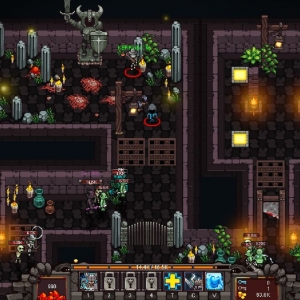





A mobile Pyromancer wins fights by making enemies cross fire repeatedly, not by planting in one spot and trading hits. In Season 10, a useful approach pairs a persistent area effect such as Scorching Aura with direct fire attacks, then uses movement to keep pressure on while leaving dangerous ground. Even Hero Siege Gold cannot make poor positioning worthwhile; the build works best when each cast creates room for the next move.
Think of the character as a moving hazard. Damage continues while you reposition, and aimed attacks punish targets that survive the initial burn. The rhythm is simple: enter a safe angle, spread fire, strike a priority target, then move before enemies can surround you.
Keep Fire Active While Changing Position
Scorching Aura gives close-range pressure as you travel through a pack. It is not a reason to run straight into the middle. Skirt the edge of a group, let nearby enemies take damage, and keep an open route ahead. When the space tightens, use a movement skill such as Phoenix Flight to cross a threat or reset your angle.
Follow that pass with a focused cast. Fireball or another reliable direct attack can finish a weakened enemy, reach a target outside the aura, or concentrate damage on a dangerous foe. Avoid spending every moment casting: a short move between attacks often prevents a hit and keeps enemies gathered where your area damage can reach them.
Change the Rhythm for Each Fight
Against large groups, prioritize coverage and flow. Sweep along the outside, turn through the densest part only when there is a clear exit, and place area attacks where enemies are converging. Volcano or similar ground-based damage is most useful when a pack is committed to a route, rather than scattered across the screen.
Elites need more deliberate attention. Keep the aura working, but reserve direct attacks for the elite instead of repeatedly hitting lesser enemies. Circle around incoming attacks, pause briefly to cast when the enemy is recovering, and move again before the next threat lands. This keeps damage steady without turning each exchange into a stationary duel.
Bosses reward patience. Stay near enough for your attacks to connect, but avoid standing in predictable patterns. Apply area damage when the boss is occupied or temporarily still, then use direct attacks during safer openings. Movement is part of the damage cycle: surviving longer creates more chances to attack.
Build Toughness Before Chasing Bigger Numbers
If ordinary hits force constant retreat, address survivability first. Improve health, defensive stats, resistance, and access to reliable movement before adding another layer of damage. A defensive skill such as Fire Shield can help cover a risky approach, but it should support repositioning rather than encourage taking every hit.
When survival feels consistent, invest in fire or elemental damage, skill strength, and attack or cooldown improvements that let you apply pressure more often. Favor upgrades that improve both area coverage and focused damage, so the character does not become efficient against crowds but sluggish against a single target.
Make Positioning the Core Habit
Watch the floor, keep an escape lane, and avoid casting through an incoming attack just to finish a rotation. A good loop is to spread fire, focus the most dangerous enemy, move across a safe opening, and repeat. If a fight turns chaotic, use movement to recover control instead of forcing one more cast.
The strongest version of this Pyromancer is not simply the one with the largest damage numbers; it is the one that keeps dealing damage while staying out of danger. Treat cheap Hero Siege Gold as a supporting resource, and shape the build around reliable movement, enough toughness, and fire upgrades that improve the encounters you face most.
Think of the character as a moving hazard. Damage continues while you reposition, and aimed attacks punish targets that survive the initial burn. The rhythm is simple: enter a safe angle, spread fire, strike a priority target, then move before enemies can surround you.
Keep Fire Active While Changing Position
Scorching Aura gives close-range pressure as you travel through a pack. It is not a reason to run straight into the middle. Skirt the edge of a group, let nearby enemies take damage, and keep an open route ahead. When the space tightens, use a movement skill such as Phoenix Flight to cross a threat or reset your angle.
Follow that pass with a focused cast. Fireball or another reliable direct attack can finish a weakened enemy, reach a target outside the aura, or concentrate damage on a dangerous foe. Avoid spending every moment casting: a short move between attacks often prevents a hit and keeps enemies gathered where your area damage can reach them.
Change the Rhythm for Each Fight
Against large groups, prioritize coverage and flow. Sweep along the outside, turn through the densest part only when there is a clear exit, and place area attacks where enemies are converging. Volcano or similar ground-based damage is most useful when a pack is committed to a route, rather than scattered across the screen.
Elites need more deliberate attention. Keep the aura working, but reserve direct attacks for the elite instead of repeatedly hitting lesser enemies. Circle around incoming attacks, pause briefly to cast when the enemy is recovering, and move again before the next threat lands. This keeps damage steady without turning each exchange into a stationary duel.
Bosses reward patience. Stay near enough for your attacks to connect, but avoid standing in predictable patterns. Apply area damage when the boss is occupied or temporarily still, then use direct attacks during safer openings. Movement is part of the damage cycle: surviving longer creates more chances to attack.
Build Toughness Before Chasing Bigger Numbers
If ordinary hits force constant retreat, address survivability first. Improve health, defensive stats, resistance, and access to reliable movement before adding another layer of damage. A defensive skill such as Fire Shield can help cover a risky approach, but it should support repositioning rather than encourage taking every hit.
When survival feels consistent, invest in fire or elemental damage, skill strength, and attack or cooldown improvements that let you apply pressure more often. Favor upgrades that improve both area coverage and focused damage, so the character does not become efficient against crowds but sluggish against a single target.
Make Positioning the Core Habit
Watch the floor, keep an escape lane, and avoid casting through an incoming attack just to finish a rotation. A good loop is to spread fire, focus the most dangerous enemy, move across a safe opening, and repeat. If a fight turns chaotic, use movement to recover control instead of forcing one more cast.
The strongest version of this Pyromancer is not simply the one with the largest damage numbers; it is the one that keeps dealing damage while staying out of danger. Treat cheap Hero Siege Gold as a supporting resource, and shape the build around reliable movement, enough toughness, and fire upgrades that improve the encounters you face most.