







At first glance, buy D2R Runes appears to be built around repetition. Players enter familiar areas, fight familiar enemies, defeat bosses they have already defeated countless times, collect loot, and do it all again.
Yet somehow, repetition becomes one of the game's greatest strengths.
The secret is uncertainty.
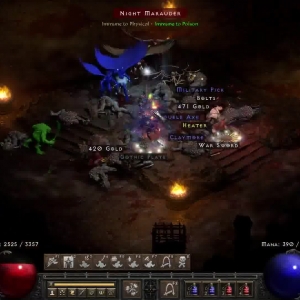
The game does not change dramatically every time a player enters an area, but the rewards can. That small difference is enough to transform routine into anticipation. A familiar boss encounter can suddenly become exciting because the next drop might contain exactly what a player has been searching for.
This principle was established by Diablo II in 2000 and remains remarkably effective.
The game's structure is simple enough to understand almost immediately. A character enters Sanctuary, fights monsters, gains experience, discovers equipment, and becomes stronger. But underneath that straightforward loop lies a sophisticated reward system.
The player is constantly being encouraged to imagine the next improvement.
Maybe the next enemy will drop a better weapon.
Maybe a useful charm will appear.
Maybe a valuable rune will finally fall.
Maybe an ordinary socketed item will become the missing component of a desired runeword.
This is where buy D2R Items enters the broader discussion around the game's enduring item culture. Whether players acquire equipment through ordinary gameplay, trading, or other methods, the central attraction remains the same: gear represents possibilities for character development.
The game also avoids making every reward equally valuable. Most drops are ordinary. Some are useful. A few are genuinely exciting.
That uneven distribution is essential.
If every monster produced something spectacular, nothing would feel spectacular.
Scarcity creates emotional contrast.
The player might spend several runs finding nothing important and then suddenly see an item that changes the entire session. That moment becomes memorable precisely because it follows disappointment.
Modern games sometimes struggle with this because they emphasize constant positive reinforcement. Frequent rewards can make players feel continuously productive, but they can also reduce the significance of individual rewards.
Diablo II: Resurrected is willing to let players experience disappointment.
That is a risky design decision, but it gives success greater emotional weight.
The game's difficulty contributes to this cycle. A powerful piece of equipment is not simply a collectible trophy. It can allow a character to survive enemies that previously caused problems. New gear can therefore create tangible changes in gameplay.
A resistance upgrade can make a dangerous area more manageable.
A faster-casting item can change the rhythm of combat.
A powerful runeword can transform a character's capabilities.
The connection between loot and performance is what prevents the equipment system from becoming purely cosmetic.
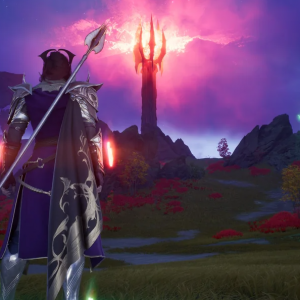
The game's atmosphere is equally important. Sanctuary is filled with ruined cathedrals, dark forests, underground passages, corrupted settlements, and monstrous enemies. The remastered graphics bring these environments into the modern era while retaining their original gothic character.
The result is a world that still feels hostile.
That hostility makes repeated runs more interesting because the player never completely loses respect for the environment.
Even a powerful character can encounter dangerous combinations of enemies.
Death can be particularly memorable because retrieving a corpse can turn a routine mistake into an urgent problem. The game creates moments where players suddenly stop thinking about loot and start thinking about survival.
Then, once the crisis is resolved, the search begins again.
The cycle is almost ritualistic.
Fight.
Loot.
Evaluate.
Improve.
Repeat.
The reason it works is that every step affects the next.
The equipment system also creates a remarkable knowledge curve. New players may initially judge items by obvious statistics. Experienced players begin recognizing more subtle interactions. They understand which modifiers matter, which bases are desirable, and why certain combinations are powerful.
That learning process gives the game longevity.
There is always another layer to understand.
Players who search for D2R Items are participating in an ecosystem where knowledge about equipment has accumulated over decades. Guides, build discussions, trading communities, and experimentation all contribute to an enormous body of shared knowledge.
Yet the game itself remains surprisingly direct.
There is no need for a complicated narrative explanation every time a reward appears.
The item simply drops.
The player decides what it means.
Why the Loop Survives
D2R Items demonstrates that repetition is not necessarily a weakness. Repetition becomes compelling when the outcome contains enough uncertainty to make every attempt meaningful.
The player may know exactly which boss they are about to fight.
They do not know exactly what will happen afterward.
That small gap between certainty and possibility is where the game's magic lives.
The remaster did not need to reinvent the formula. It only needed to preserve it, modernize its presentation, and remove enough old technical inconvenience to make the experience comfortable on contemporary hardware.
More than twenty years later, players still return to Sanctuary for another run.
They already know what they are going to do.
They simply do not know what they are going to find.